The practical answer on big glass
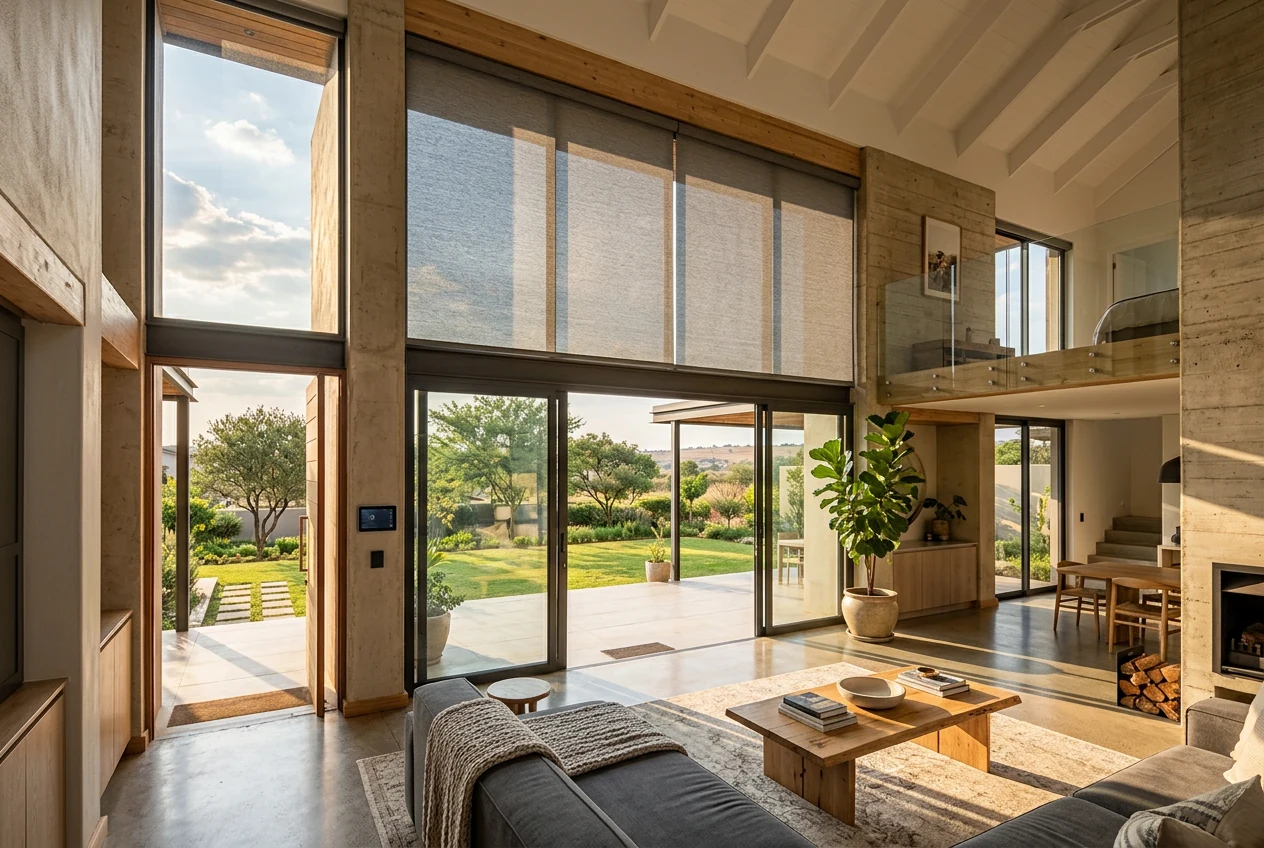
A Blue Hills stand tends to come with a lot of glass — double-volume living rooms, wide sliders onto the veranda, windows above stair voids. Past a certain span or height, a chain simply isn’t practical, and motorisation stops being an upsell and starts being the only sensible option.
How it’s powered
Rechargeable battery motors need no wiring and suit a retrofit onto an existing home — charge every few months and you’re done. Wired 220V motors suit new builds and full renovations: permanent, no charging, and the right choice for big or heavy systems and anything exterior. An electrician and a bit of planning are needed, which is exactly what the free measure is for.
Control that matches how you actually live
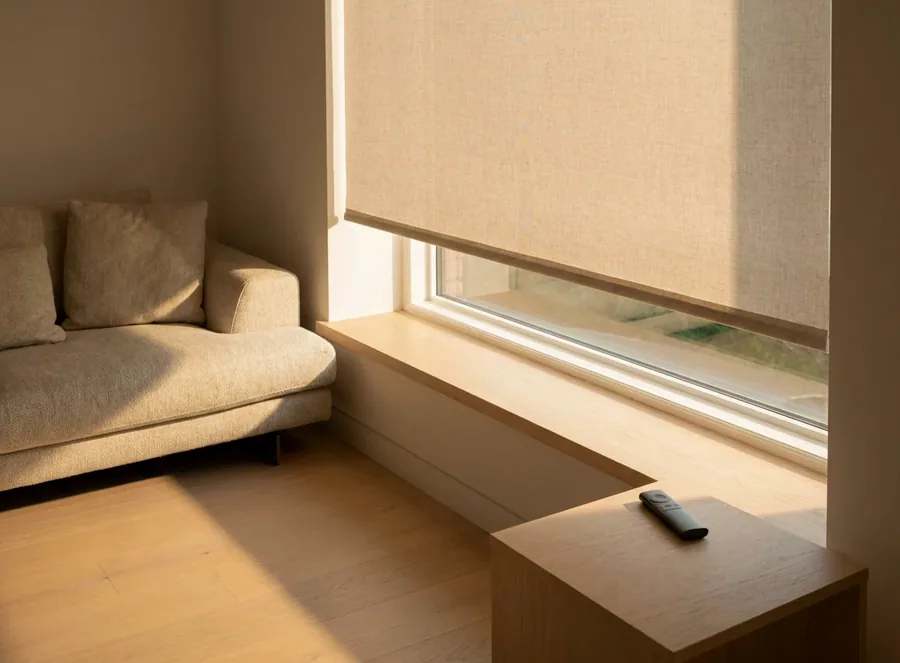
A single multi-channel remote can run every blind in the house. App control means checking whether the west blinds are still up from the office. Schedules open the bedroom blinds at sunrise and drop the west-facing ones at 3pm in summer automatically. Sun sensors do the same job without a schedule, reading the actual light. And on anything exterior — awnings, external venetians, zip screens — a wind sensor is the safety-critical piece, retracting the system automatically before a highveld storm front or a hard gust does any damage.
Worth knowing
No dangling chains makes motorisation the most child-safe operation there is — nothing to reach, nothing to loop. Motors run quiet, not silent, and a decent one carries a multi-year guarantee. Battery motors do need that periodic charge; we’ll set the expectation clearly at quote stage so there are no surprises.
What automation actually adds
Motorisation cannot be priced on its own, since a motor only ever goes into something. Taken as a whole, automated products come in between R2,500 and R7,500 per square metre installed. The least you will pay is for a motorised roller on a normal indoor window band; an exterior system built to live outdoors through Highveld sun and hail is at the top.
Sensors, wall keypads and hubs are quoted as their own lines separately rather than swallowed by the square-metre rate, so each window can be judged what earns its place. Small openings carry a minimum charge. Treat all of these figures as orientation: the binding number comes after the measure, when the motor count, the products they sit in and the power supply for each are all settled.